
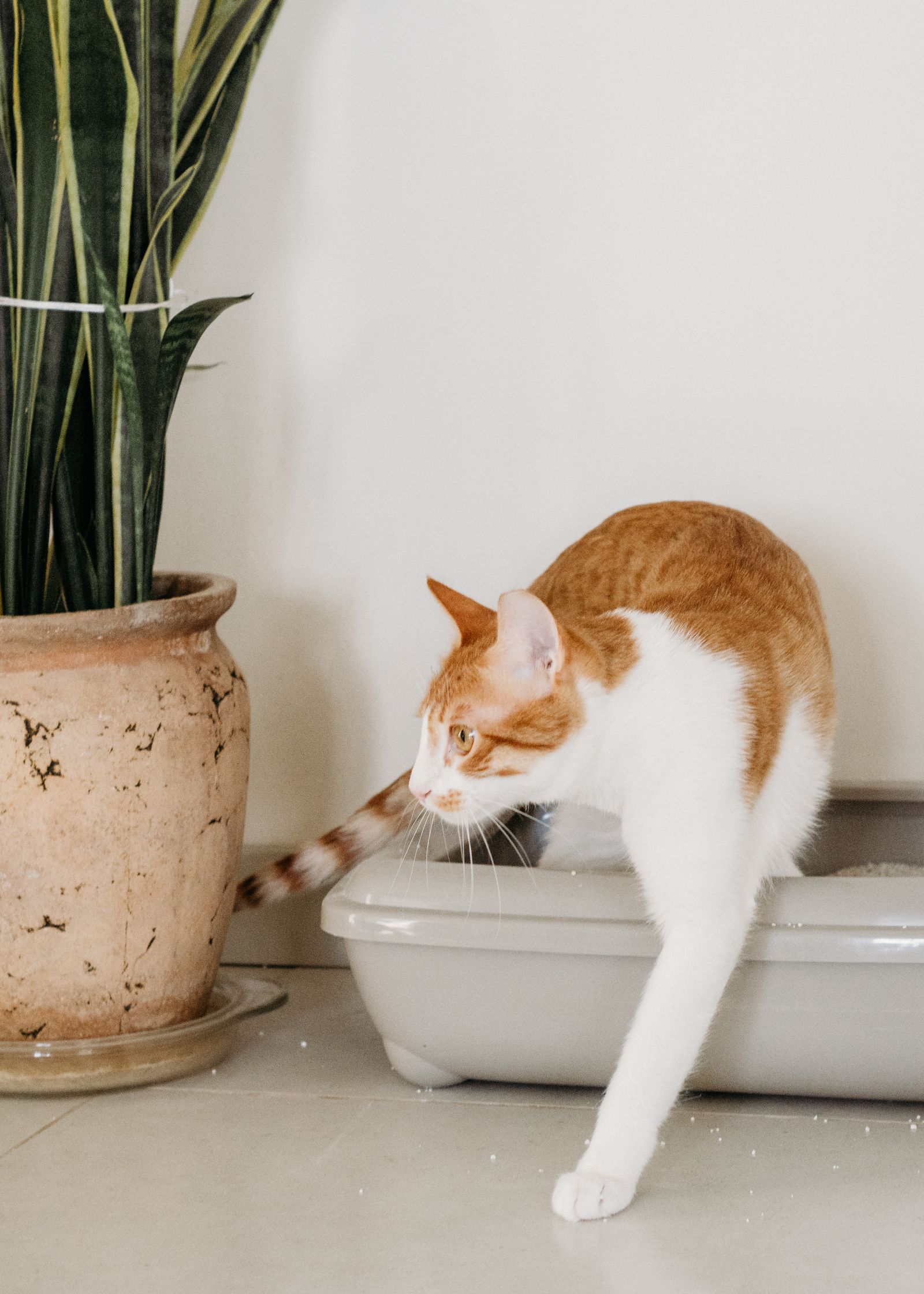
Before changing the litter or moving the box, check whether your kitten is actually passing urine comfortably. Repeated straining with little or no urine needs immediate veterinary attention, even if you think the kitten might be constipated.
Cornell identifies urinary obstruction as an emergency. Blood, crying, vomiting, or lethargy makes the situation more concerning. Seek veterinary help before trying changes to the box.
If your kitten passed urine or stool comfortably and shows no urgent signs, clean up calmly and check their access to the box. This guide assumes a weaned kitten who toilets independently; very young or unweaned kittens need an individual veterinary or experienced rescue care plan.
Clear the mess without frightening the kitten
Move the kitten to a comfortable safe area while you clean. Remove waste, blot urine, and use a cat-safe enzymatic cleaner appropriate for the surface. Follow the label for contact time and when the kitten can return.
Don't shout, punish, or put the kitten's nose near the mess. An accident isn't evidence of spite. Punishment can make toileting around people more worrying without fixing the cause.
Note whether you found urine, stool, or both before cleaning everything away. A photo of an unusual finding may help your vet, but don't let collecting information delay urgent care.
Check the entrance and the route to the box
Get down to the kitten's level and look at the journey. Is the entrance low enough? Does a door close across the route? Is there a noisy washer, an excitable puppy, or another cat beside it?
Choose a low-entry box with enough room for your kitten to turn around, and place it in a quiet, reachable location. Keep food and water separate from litter. Cats Protection's kitten-care guidance supports accessible resources and a calm initial setup.
If your kitten has just gained access to the living room, add a nearby box instead of expecting a long trip back to the original room. Don't move the only familiar box far away all at once.
The first-day kitten setup helps organize a smaller starting area. Expand access with reachable toilet options as the kitten learns the home.
Review litter and cleanliness without changing everything
Start with the familiar litter when possible. Choose an unscented litter suitable for your kitten's age; ask your vet if you're unsure which type to use.
Scoop daily and more often when needed to keep the box inviting. Clean the box regularly with suitable products, following their directions. Avoid suddenly replacing the familiar litter, box style, and location together.
One box per cat plus one extra is a starting point, with boxes in separate useful locations. It doesn't solve access if another pet can guard the only route to all of them. Cornell's house-soiling guidance discusses medical causes, preferences, and resource access.
For example, if accidents began after adding a scented litter, offer a familiar option while discussing recurrent problems with your vet. Don't assume preference is the only possible explanation.
Observe the pattern without hovering
Keep a brief note with enough detail to compare events:
- Urine or stool, with an approximate description of output.
- Frequency of attempts and any straining or crying.
- Stool consistency, when relevant.
- Location and recent changes in the home or box setup.
"Small urine spot beside box; several attempts; seemed uncomfortable" is different from "Formed stool in hallway after door to box room closed." Call a veterinarian immediately about the first pattern; repeated attempts with little urine can be an emergency.
Use a shared care note alongside the first-week kitten routine so a caregiver doesn't scoop away important information without noting it.
Don't push paws through litter or force the kitten to remain in the box. Once they're toileting, keep the area quiet; startling praise or interruption can get in the way.
Ask your vet about recurring accidents
Repeated accidents deserve veterinary assessment even when the kitten seems otherwise well. Sudden toileting changes, diarrhea, constipation, or painful defecation need prompt advice, particularly in a young kitten.
If you can't tell whether repeated straining is for urine or stool, call an emergency clinic and describe what you're seeing. Don't guess and wait.
Marking and ordinary elimination can look different, but location alone won't establish the cause. Avoid labeling an accident as territorial before medical and access issues have been considered.
Look for comfortable toileting and boxes your kitten can reach independently. Even when accidents stop, keep checking for straining, unusual output, or signs of pain.
Sources: Cornell house-soiling, Cornell urinary disease, and Cats Protection kitten care.

