
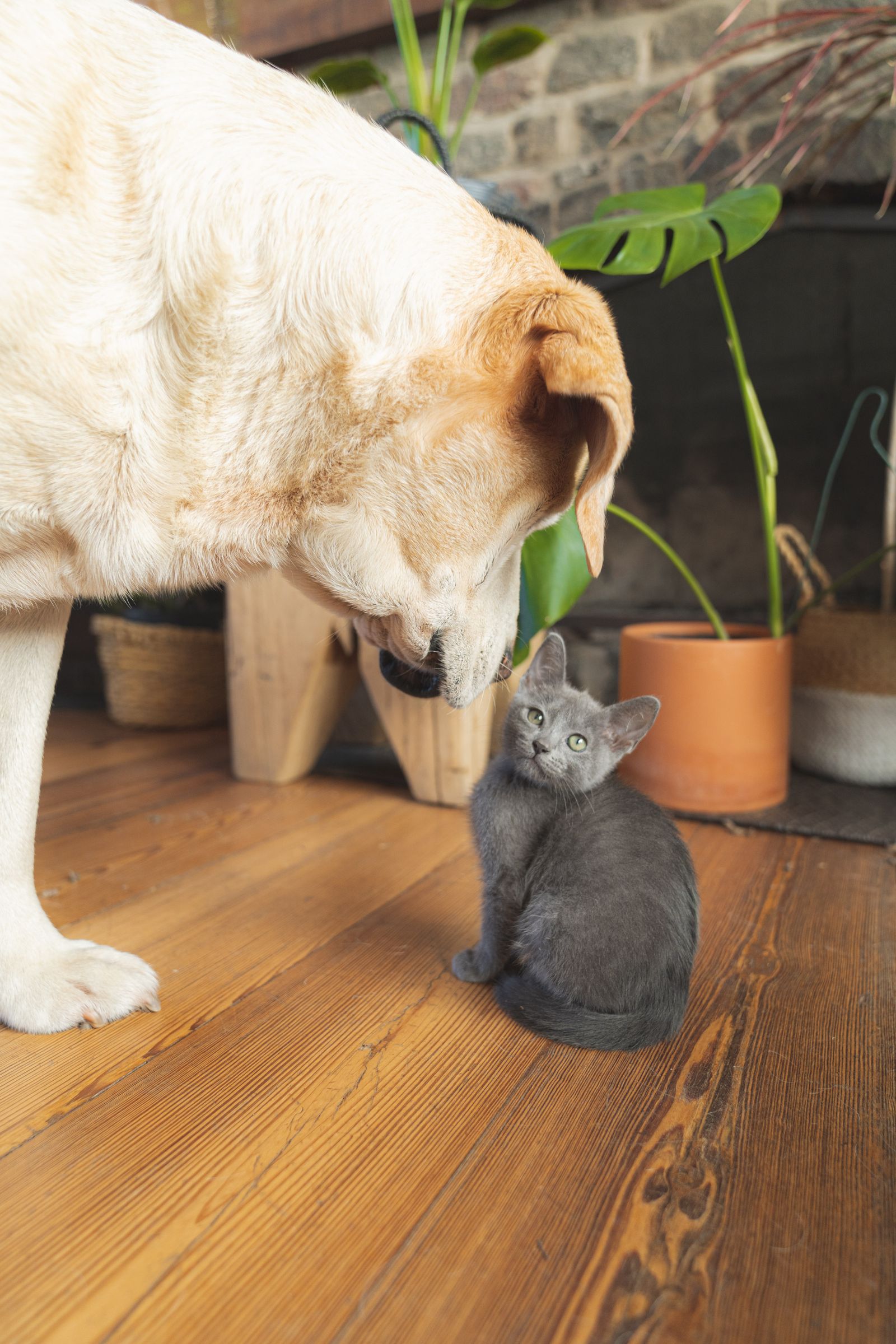
Use separation, scent exchange, secure barrier sessions, and only then short same-room sessions. The kitten always needs a protected room, high escape options, and freedom to retreat.
Keep the dog under adult control and reward calm disengagement. This process improves safety, but it cannot guarantee compatibility.
Assess the match before contact
Review the dog’s history around cats and small animals. Note any intense staring, stalking, chasing, grabbing, or shaking. Consider whether the dog can turn away from movement and respond to a handler.
Also consider the kitten’s age, health, confidence, and physical fragility. If the dog’s history is unknown or concerning, do not stage a test greeting.
Ask a qualified reward-based behavior professional to assess risk. No introduction exercise makes a high-risk pairing safe by itself.
Build a kitten-only base room
Prepare a room behind a closed door with food, water, litter, hiding places, scratching options, a bed, and vertical space. The dog must not be able to push through the door or trap the kitten at the entrance.
Let the kitten establish normal eating, litter use, play, and rest before visual contact. The first-week kitten guide covers this settling period.
Exchange information without a meeting
Let each animal investigate scent on bedding or a soft cloth without placing it against their face. You can also allow separate exploration of a shared area while the other pet is securely elsewhere.
Pair calm investigation with food, play, or attention the animal enjoys. Increase separation if the dog fixates at the door or the kitten stops eating or using the litter box normally.
Begin with a secure barrier
Use a tall, stable barrier the dog cannot jump, push, or squeeze through and the kitten cannot become trapped in. Add a second layer or more distance when needed.
The kitten must remain free to hide or climb away. An adult controls the dog on a comfortable harness and slack leash.
Start far enough away that the dog can notice the kitten and look back to the handler. Reward looking away, soft body language, sniffing, and other calm behavior. End after a short success.
Never hold the kitten for a nose-to-nose greeting or allow a chase “to see what happens.”
Advance only after repeated calm sessions
Reduce distance gradually across separate sessions. Watch the whole body, not one wag or ear position.
Stop for hard staring, stalking, trembling, lunging, unresolved barking, chase attempts, cornering, panic, or inability to respond. Also watch for hiding, appetite loss, litter changes, and inability to rest.
Try a short same-room session
Consider a shared room only after repeated calm barrier sessions. Keep the dog leashed with an adult, provide several high exits for the kitten, and prevent access to tight corners.
Begin at a distance and keep the session brief. Reward the dog for orienting back to the handler. Let the kitten leave. Do not place food or toys between them to force interaction.
Progress means remaining calm in the same environment—not touching, playing, or sleeping together.
Keep management in place
Separate the pets whenever active adult supervision is absent until a long, stable history supports a safer plan. Some homes need permanent separation when nobody is watching.
End contact after any chase, pin, grab, bite, cornering event, or repeated fixation. Check both animals for injury and consult a veterinarian or qualified behavior professional before another attempt.
For the opposite setup, see how to introduce a puppy to a cat.
Sources: American Humane, VCA Animal Hospitals, Pasadena Humane.

